Showing posts with label Bier Wars. Show all posts

Wednesday, 13 January 2016

The Battle of Santo Malanca


Taking advantage of cold weather but low snow levels the Austrians under Kollorfeldt launched a column with the objective of seizing the import town of Santo Malanca. However Kollorfeldt, presuming his opponent was unable to fight in the wintery conditions gives little thought to scouting or screening his flanks and allows his Croats to bring up the rear.

Unbeknownst to him, Campari's General Avvio has not only managed to locate the Austrian column but is about to launch an attack on his line of March.......

With the town a little way up the valley, Kollorfeldt was sure that he would be able to seize it and it's important bridge and settle down somewhere warm in time for supper. His reverie was disturbed when a trooper from the Dragoon regiment providing the advance guard rode up and told him the way was blocked by red coated infantry. He had little time to think before the sound of artillery came from his right flank and he knew he had blundered into a trap.

Kollorfeldt ordered his first two infantry units forward, together with the dragoons. He would lead an attempt to burst the through the blocking force. Order were sent to General Gummstiefel to turn the rearmost elements of the column to face the flank attack and to send the Croats round their flank to force them to disengage. 


The dragoon's cantered up in the powdery snow and drew their swords their change was short, and already they could see that their own flank was in danger from Avvio's cavalry. As they closed with their foe a strong volley of musketry rolled out and cleared many of the brave men from their saddles. The charge closed, but the horses wouldn't press home against the line of steel. They recoiled and a second charge went in. More musketry and more saddles cleared. Madness perhaps, but success would clear they way for the infantry and open the road ahead for the column. 


Kollorfeldt cursed as he watched the dragoons fail to batter through the enemy infantry. As a young ensign he had charged with Eugene and against the Turks - cavalry was unstoppable then. He turned and ordered his men to deploy into line. He would have to shoot his way clear. 


At the rear Gummstiefel was in trouble. The Croats advance had forced the artillery to draw back but Kollorfeldt's movement to the front had split the column in two and now he was flanked by Campari re was little he could but try and find space to fight so he ordered his regiment about and started to retire. He called for a messenger to pass a note to the Kollorfeldt - but he had scarcely time to dictate his message when the man when down in a hail of lead. A quarter of the regiment lay dead around him - Gummstiefel prayed for nightfall.


Kollorfeldt's advance had ground to a halt and now it was clear there was little he could do. All around him his men lay dying, cut down by the sabres of attacking cavalry or shot by heavy volleys of musketry. How would he survive the disgrace of this defeat? In the last rays of the winter sun he saw his chance - he ordered his staff to draw their swords and together they spurred their horses forward, galloping clear of the carnage the small band cut through the Campari ring and away form the battle. Someone had to bring the news to imperial headquarters - Gummstiefel was clearly to blame for losing contact with the rest of the column and had dragged the whole lot to destruction....yes..that would do....


Some notes - 
A scenario based on one from Neil Thomas's One Hour Wargames and in turn based on Salamanca. Alistairs's Austrians had two choices, stand and fight it out or try to cut their way clear. Andy's Campari  army managed to defeat them in detail once the colon had broken up, but it could have been different had Alistairs dragoons cut their way through or Andy's cavalry ran out of space then they galloped into the the gap between two Austrian regiments! A nice simple game, but a tough one.

Wednesday, 30 December 2015

A Coach for His Grace

I finally managed to get round to painting my Warlord "Napoleon's Berlin Carriage". Frustrating model which resisted many attempts to get it to stick together. 

I wanted it looking like it's been travelled in, not just out the showroom! 


Still needs the lamps and driver attached, but almost there now.

Thursday, 26 November 2015

Bier Wars - the Battle of Amaretto

As a warm up game for the next part of the Bier wars campaign we fought the battle of Amaretto on Tuesday night. 

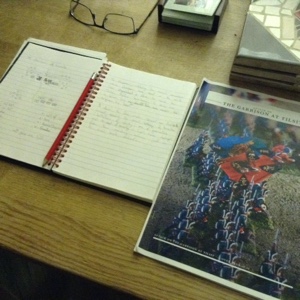
This was based on the excellent scenario "The Garrison of Tilsit" written by John Rae, author of "A Military Gentleman of the 18th Century". 


Planning 

What was supposed to be an action by Austrians against The Duke of Campari's men turned out to be an invasion by Hoegaarden instead as I forgot to pack the Austrians. However.....

We got set up and I managed to put the Faller buildings I have been keeping my eye out for on EBay. As you can see the large church is still a very big building one scale up from its intended use. I saw a similar building on the Cröebern 1813 (www.croebern-1813.de) site and book, so couldn't resist when I saw this on up for sale. 

Defending the little border village were two units of The Duke's infantry, a unit of Grenadiers, dragoons and some light guns. Attacking were 2 line regiments, a grenadier regiment, unit of Croats and some rapacious Cossacks, attracted by the potential of plunder (yeah picking's must have been thin elsewhere!) 


Things got underway when the morning mist cleared and the Garrison found the foe deployed in the fields across from the village. An artillery duel commenced while Hoegaarden troops advanced. 


The light infantry screened the advance, but began to take some casualties as they shot at the exposed crew.


Campari's officers are disturbed from their devotions and observe the enemy closing on their positions.

From the flank, Campari's dragoons threatened the left wing of Hoegaardens army. The Cossacks were employed to disrupt this advance, ready to pounce on an exposed unit. It worked for a while and the cavalry danced for advantage.


By now the lines of white uniformed infantry were approaching musket range and closed to blaze away at the defenders.


However the light infantry had not been able to drive off the gun crew and the Campari guns fired into the foe with canister shot.


Facing this onslaught there was little the Hoeggarden men could do. And they began to fall back. 
On the left the Dragoons had finally driven off the Cossack swarm and we're ready to engage the shattered infantry.


From the windmill, the Archbishop's staff ordered a withdrawal! His generals arguing about the quickest route back to safety!


A great game with some rather excellent inspiration provided, saving me form actually working much out. The positions of the defeated units varied slightly and the numbers of casualties varied greatly from the original, but that was a consequence of the rules. 

NT's rules coped well enough with a slightly smaller game, but we both thought we could up the hits each unit suffered from 4 to 6 before losing a stand if we were going to play at this scale again.  

Now we will see if Campari retaliates and opens a new front in the south. However his health and behaviour has become (more) unbalanced of late, so who can tell what the future holds!


Thursday, 30 July 2015

More on India


Introduction


In the latter part of the 18th Century, the Archbishop of Hoegaarden became keep to expand trade beyond the narrow limits of Europe and reduce the reliance of the country on local trade which was increasing effected by war.

As Hoegaarden’s main export was of course Bier this limited the resources to trade with somewhat, but the Archbishop was a man of singular vision and insight. Having heard of the trade in Pale Ale to India and Russia, it was decided that Hoegaarden would enter the trade, supplying an export version of its famous brew which would be perfectly suited to refreshing European throats in the subcontinent.

The Hoegaarden Staat Bedrijf Corporatie (Hoegaarden State Business Corporation) was subsequently founded.

Within months barrels of witte bier were on their way to thirsty colonies in the Caribbean, Americas and Indies.  Due to the popular it of the product it became necessary to protect the precious cargo until such time as it was fully delivered to its end location and the HSBC were granted the right to form small forces of marines to serve aboard ships carrying their wares. Indeed it soon found that when served in its traditional style with a slice of lemon, that cases of scurvy began to reduce on long voyages.

HSBC Maritime Forces.


Each of the ships commissioned to carry HSBC products was given a contingent of 60 Marines to protect it and its valuable cargo. Further companies were formed to guard the barges and warehouses of the Corporatie around the globe.  At its peak the HSBC had several thousand European soldiers and twice that number of native soldiers serving under its colours.
 Hoegarden Staat Bedrif Corporatie Flag

Maan’s Blaus.


The Marines were given uniforms in State colours of Blue and Yellow rather than the white of the infantry because it was felt the Blue was more appropriate for a naval force.  The first Colonel of the HSBC Marines was Jacob Maan and the troops were affectionately known as Maan’s Blaus. Maan, would become famous for after his retirement from service when he opened a brewery in the the American colonies which took the name of his men.

Native Troops


It quickly became clear that European Troops served best at sea and that Native soldiers would be best deployed to guard warehouses in country where their natural immunity to disease and ability to reside in the tropical climate made them better suited to their post.  In the Americas the native men were known as Peons, borrowing form the Spanish, whilst in the East they were known as Sepoys. Native troops not only guarded the depots but occasionally travelled with deliveries of Bier to inland locations and in India where distances were longer some men were given mounts. On the subcontinent bandits were a concern. Over time these groups became more numerous and better organised prompting some concern that another hand was directing them, a local prince or disaffected ruler seeking to stir up the population against the foreigner.


Friday, 3 July 2015

Simple Rules for Horse and Musket Sieges

At some point in the Bier Wars we are going to have an army besieged in its depot. Although warfare from the mid to late 18thC was much more mobile than its earlier Marlburian phase our wee armies banging around in little states are going to bump into something fortified sooner or later.

I needed something that could be worked out with dice and didn't need models to make happen. the essential components of the siege, a blockade, bombardment and assault and the attrition of men, plus the conventions of war needed to be included but there needed to be as little book keeping as possible. With that in mind I worked up the following rough draft.

The basic mechanisms work out ok, its the bonus/benefit of picking an action like mining, or sallying that doesn't quite click yet. however I think I'm not far off it.


I've got this on pdf, so if anyone desperately wants a copy then drop me a line

Wednesday, 24 June 2015

Defeat for Hoegaarden


Prussian Tactics prove too much for the Archbishop’s forces!

The army of Hoegaarden was defeated by the forces of Feldschlosschen in a pitched battle at the village of Chimay in Staropramen, just to the north of Hopgarten. General Julius van Leffe, commanding the Hoegaarden army had camped around the village and drew his forces up on the open ground to the east. The village itself was garrisoned by a regiment of infantry and the cavalry and grenadiers deployed in the fields to the west.


 Feldschlossen came off the line of march and split into two main columns. Their weight was concentrated against Hoeggarden’s left, on the western side of the village, with 3 infantry and 2 cavalry regiments. Another unit advanced down the road leaving but a single regiment and their artillery on the east side, Hoegaarden’s right.

The battle opened quickly with artillery fire causing early casualties on the infantry. Van Leffe, seeing the threat to the west, ordered the Yellow regiment to countermarch across the rear of the army to support that side.  The Rose and Blue regiments advanced and, with support from the artillery began to close on Feldschlosschen’s sole regiment on that part of the field.
 

To the west however it was clear that there would be trouble.  The Grenadiers closed up against the town and as the enemy approached were able to cause some damage.  The Horse grenadiers charged, hitting and driving off Feldschlosschen’s dragoons but were counter attached in turn by the enemy cuirassiers. A swirling melee developed and the Hoegaarden dragoons were drawn in, but the cavalry of Feldschlossen prevailed and the remains of Hoegaarden’s cavalry were sent reeling back.

The grenadiers, hoping for support from the Yellow regiment, were taking heavy casualties as volley after volley crashed into them.  The defenders of Chimay began to fire into the flank of the Feldsclosschen regiment which had advanced down the road, but was now lining the hedgerow to fire at the enemy moving up on the eastern side of the battlefield.


Here at least Hoegaarden were successful as the Feldschlosschen infantry withered away under cannon fire. A vain attempt to save them by having them march to the rear only served to expose their backs and with all cohesion gone, the regiment melted and ceased to exist.  However the same effect was being produced on the Rose regiment, forcing it to halt and allow the Blues to advance, drums beating.  There was a chance now that this side of the field could be swept clear and a turn executed to bring the regiments on to the flank of Feldschlosschen’s positon.  Van Leffe urged his men on, ordered the guns to limber up to move to a new position and sent his staff officers to find out what the Yellow regiment were doing. At that point a volley of cannon balls hit the Blue regiment and it halted in its tracks, a second volley followed and the sight of red coats through the hedge to their flank caused the unit to waver and men began to leave the ranks. The chance had gone, the attack had failed!

Van Leffe’s staff officers returned to inform him the Yellow regiment had been delayed by the terrain in cutting across the road and was now deploying on the western side of the field, but their Colonel reported the cavalry defeated and the Grenadiers reduced to a few battered men. Taking stock of the situation, Van Leffe swore and threw his hat to the ground. It was time to retreat and save the remainder of the army.